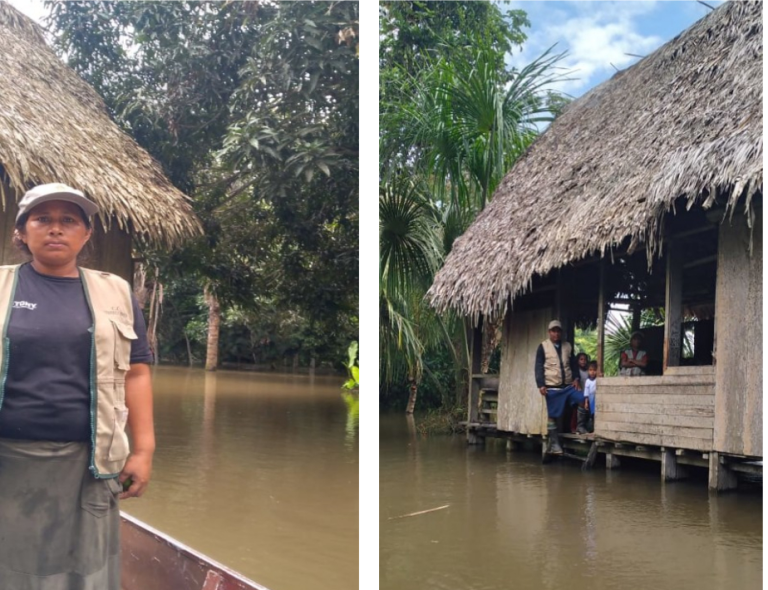

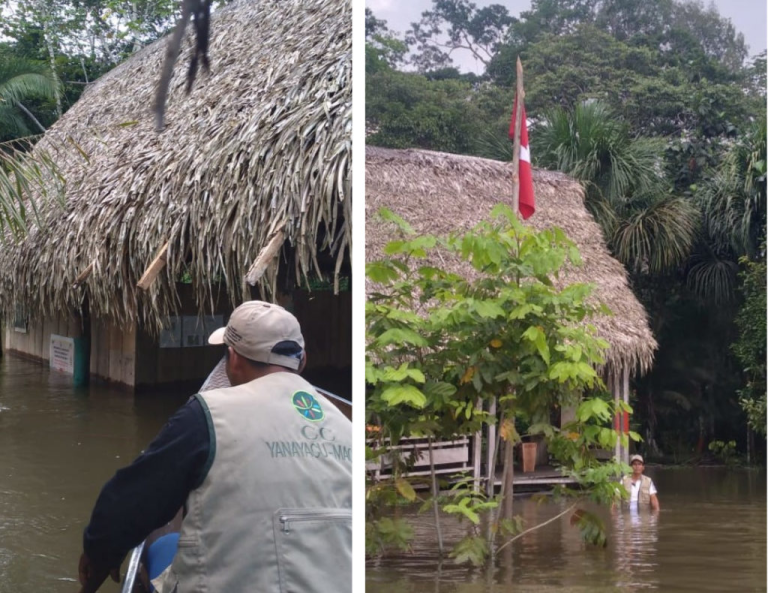
Since December, the rains have been intense. Forest rangers have watched the water levels rise gradually. The riverbanks—where boats and canoes once docked—are disappearing. There is no longer any dry land where the guard posts once stood, and the composting toilets are now completely submerged.
This winter is as severe as the one in 2011–2012, when floodwaters remained stagnant for two months, causing the death of a large portion of the 30,000 trees we had replanted alongside local communities. Yet, with determination and resolve, we began reforestation efforts again just a few months later.
It is now April 2nd, and we hope the rains will soon cease. Nevertheless, the villagers anticipate another rise in water levels as Easter approaches.
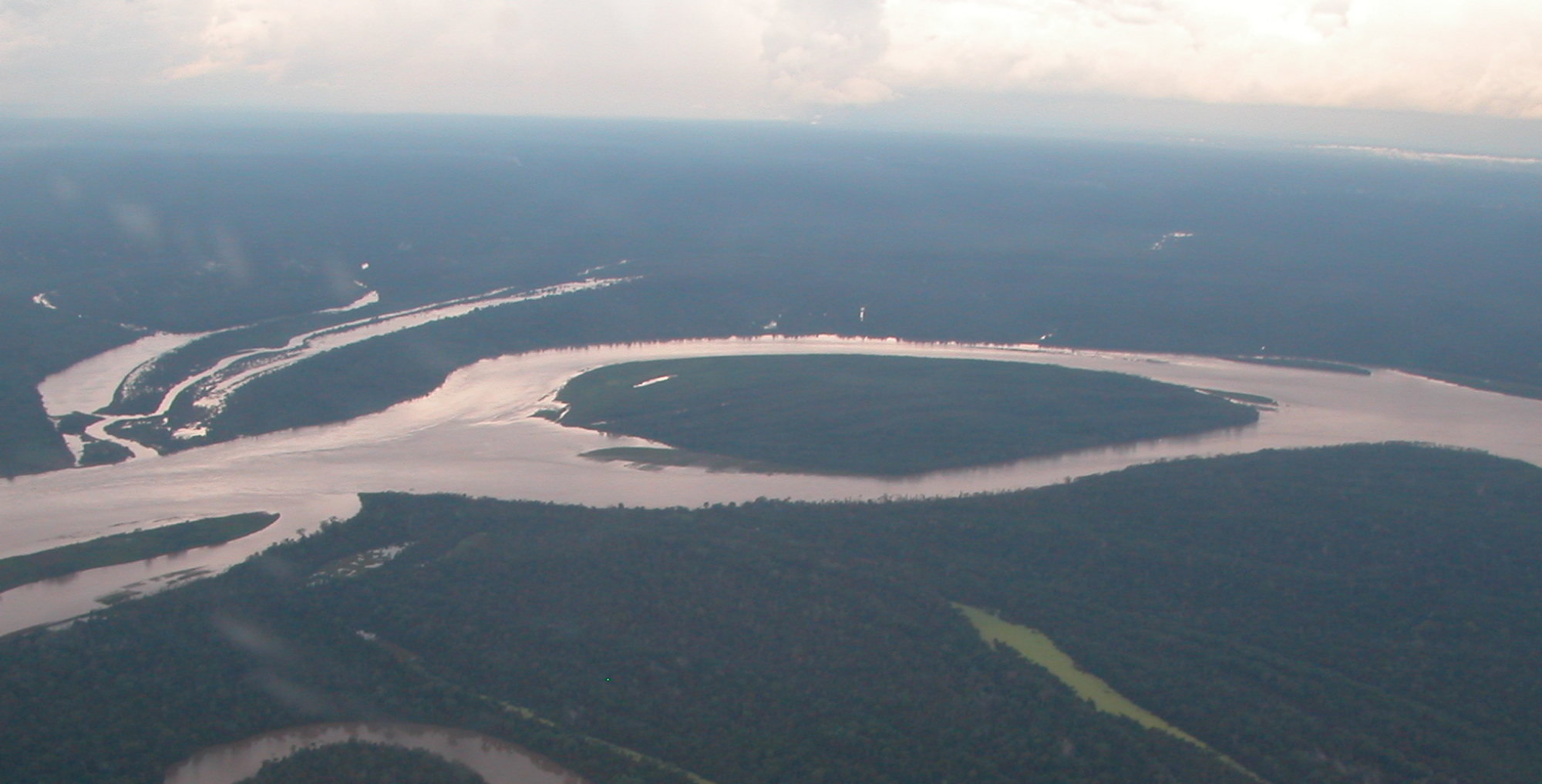
Wildlife is paying a heavy price. With the exception of monkeys, mammals such as white-lipped peccaries, collared peccaries, and deer are easily hunted by poachers. In their search for dry ground to rest on, these animals become vulnerable prey.
Forest ranger patrols have been stepped up, but the savanna is becoming increasingly difficult to monitor. Every nook and cranny has turned into an entry point for lawbreakers. Currently, the team of six forest rangers reports that most violations involve wildlife, while incidents of illegal tree felling have decreased.