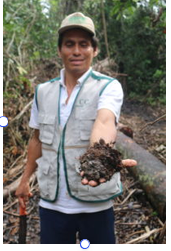
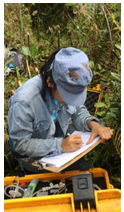
The UNAP (Universidad Nacional de la Amazonía Peruana) came to informally support the project of the design of hace varios años, amidst studies carried out in the turbera. Esteem, the collaboration has dado a new giro and has been formalized with the firm of an acuerdo to respond to the actividades of vigilancia and monitoring of the area.
In this way, the concession may be presented to an official solicitor to support Peruvian volunteer students from Forest Engineering and Biologia careers. It deals with high-level specialties for local park guards, which are professional. For students, the concession represented an exceptional learning experience that allowed many students to discover.
During the first year of its support for the Concession, Envol Vert has committed to backing daily monitoring activities, while also fostering the development of longer-term projects with surrounding communities. These initiatives are designed to integrate local communities into the conservation project, ensuring they are not merely beneficiaries, but active participants in forest preservation—both within the concession area and on community-held lands.
Defining a socio-economic project is a process that entails extensive discussion, as well as an analysis of the communities’ specific needs and expectations. The goal is certainly not to devise projects on their behalf, but rather to identify alternatives that address their requirements, thereby ensuring local ownership and the ultimate success of these initiatives.
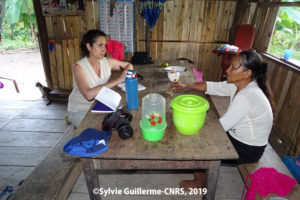
Throughout the year, several meetings have taken place—most notably during a visit this month by researcher Sylvie Guillerme, from the CNRS in Toulouse. Over the course of several days of meetings and site visits, participants were able to compare their respective perspectives, helping to refine the report that Envol Vert will issue at the end of the year.
Dr. Sylvie Guillerme specializes in the analysis of the relationship between humans and forests—an invaluable asset for developing or evaluating our future projects. We hope this partnership will evolve into a more comprehensive study in the years to come. In the meantime, we will keep you updated on the progress of this collaborative development process; an initial report will be shared with the communities in September, and we look forward to receiving their feedback.
¿The “turbera”? Seguramente este término le resulte familiar… Le contamos más al respecto.
The Maquia turbera, a unique ecosystem
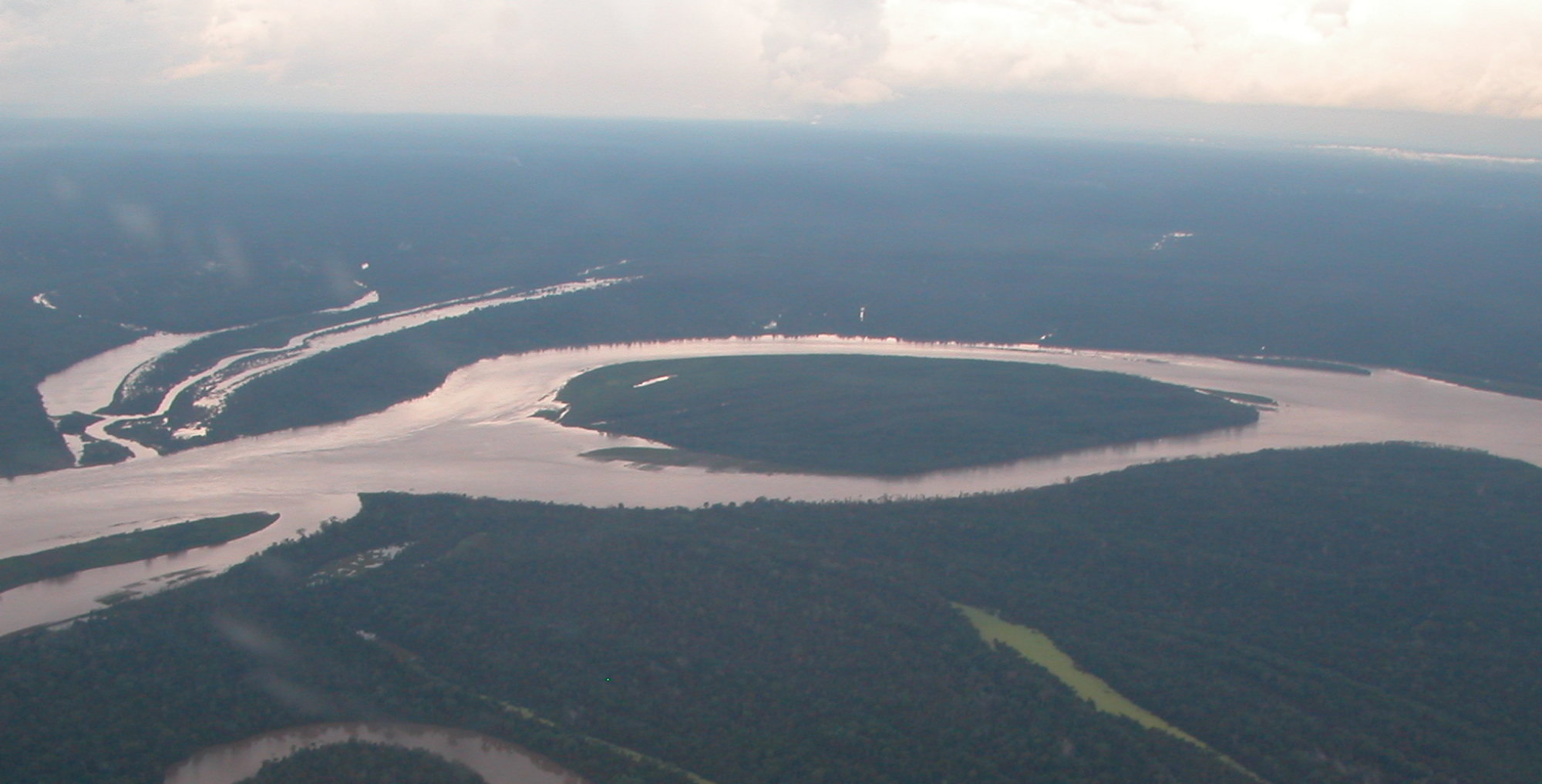
The Yanayacu-Maquia Conservancy, with a total surface area of 38,699 hectares, is approximately equivalent to four of Paris’s largest crops and is located in the Peruvian Amazon. Inside the concession is represented by our forest ecosystems, among them one very particular: the turbera.
The surface area of the peatland in the Yanayacu-Maquia Concession is estimated at 7,000 ha, representing 15% of the Concession’s total area.
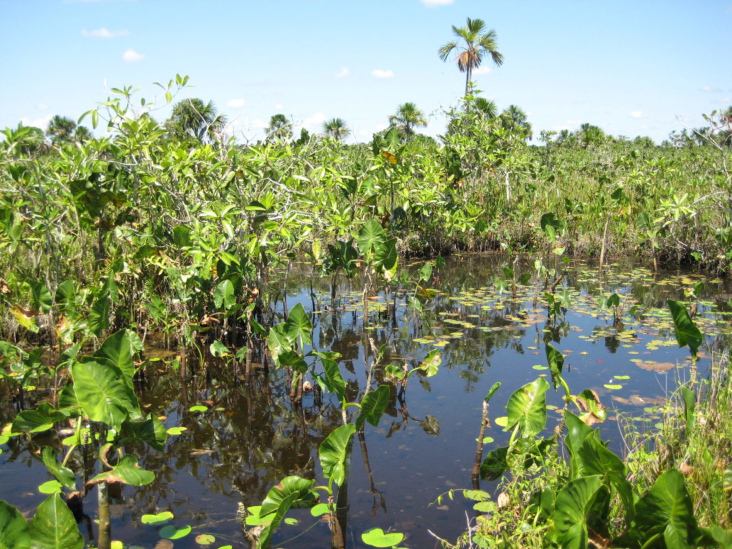
A turbine is an ecosystem that is characterized, first of all, by a permanently saturated water reservoir or with very little movement. This deprives the microorganisms (bacteria and fungi) — responsible for the decomposition and recycling of organic matter — of the oxygen necessary for their metabolism. Under these asfixing conditions (anaerobiosis), plant foods mineralize slowly and partially. Therefore, it accumulates gradually, forming a deposit of organic material that is poorly decomposed or does not decompose: the turba.
The turba, which can be considered a species of vegetable rock, is an organic source resulting from the incomplete degradation of vegetable deposits to a mediocre water saturation. It also contains a 20% carbon content (a 30% in the case of low-carbon arcillas) and can accumulate up to 20% carbon, at an average rate of between 0.2 and 1 mm over the year.
Why is it important to preserve the clouds?
Se estima que las turberas albergan, por si solas, alrededor de un tercio de todo el carbono present en los suelos del planeta. In addition, “tropical” turbines contain double carbon that covers all the forests of the world together. If a turbine is affected, the consequences of the climate change will be greater.
A functional turbera is, therefore, an ecosystem that poses:
The carbon storage capacity, which mitigates the effects of the climate change.
The capacity to regulate water flows, which helps to mitigate flooding during the rain period.
The capacity to accommodate a large variety of habitats and species constitutes a source of biodiversity.
The capacity for accumulating organic materials in its capacity only a long way from mileage allows you to recognize the pasado.
Among the rural communities that live in the area, more than 50 plant species come from this ecosystem that are used for construction, food, medicine and the formal economy. It is, moreover, a refuge for biodiversity. Therefore, apart from the number of species of species, anfibios and reptiles, the turbera Maquia alberga aguajes (Mauritia flexuosa), an arboreal species characteristic of this ecosystem in the Amazon. These trees produce abundant fruits and many nutrients that have a diverse and numerous fauna, which includes monos, tapires, pecaríes, agutíes, guacamayos, among others.
Aliados clave on the earth for the scientific sequence
Since 2015, the University of Arizona (United States) collaborated with the Concesión en el studio de la turbera Maquia. Its scientific team, led by Hinsby Cadillo, focused especially on the dynamics of the carbon flows in the soil and the vegetation of the turbera. In June of 2019, parks and local communities will build a forest base around the turbera to support scientific teams during camp work. The team of the University of Arizona, with the support of our new Peruvian sociologists from the National University of the Amazon Peruana, is planning to carry out a specific studio for the finals of July 2019. We hope to see the results!
To deepen more through the images, see the micro-reports recorded on the ground by our teams.
As water levels rise, poachers lurking in the vicinity of the concession discover new access points; they choose to ignore the signage marking the protected zone, venturing right up to the perimeter to fell trees. It goes without saying that, after 13 years of conservation efforts, this area inevitably draws the attention of poachers driven by the prospect of illicit gain. As time passes, the forest areas surrounding the concession are becoming increasingly depleted, which only intensifies the pressure on the Yanayacu Maquia Concession and its abundant natural wealth.
This year, we regret the loss of about a dozen majestic trees during a particularly aggressive incursion by a group of more than fifteen individuals. It took great courage—and support from park rangers and community members—to drive the group away before the damage could worsen.
For our internal team, the work does not end there. The concession is obligated to report such incidents to regional authorities, who kindly traveled to the site this month to document the offenses and assist us in putting a stop to this trend. We certainly hope they will return next year to provide proactive support to our teams.
World Ranger Day is held annually on July 31st to honor rangers around the world who have been injured or killed in the line of duty. It is a special occasion to pay tribute to our three rangers, who have been involved in the conservation of the Yanayacu-Maquia Conservation Concession since 2006.
Our rangers face increasing risks due to illegal deforestation. It is deeply concerning that their lives are put in danger every single day when they head to work.
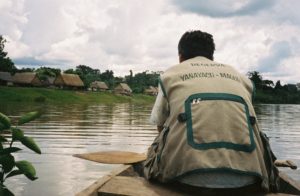
To better understand their dedication and commitment, we spoke with Ivan—a ranger at the Yanayacu-Maquia Conservation Concession—who recounts the events that took place on the night of May 13th and shares what his daily life is like. Here is his account:
“The night the checkpoint was destroyed, I was 20 minutes away at another checkpoint. Since there are only three of us rangers to monitor nearly 40,000 hectares of forest, it is impossible for us to keep track of everything that happens. The loggers took advantage of our absence to destroy the checkpoint—for the third time in a row. They are trying to push us to our breaking point, hoping we will eventually let them into the concession so they can cut down trees with commercial value. In the past, loggers wouldn’t enter our area because they could find the trees they were looking for elsewhere. Now, due to deforestation, they are pushing further and further toward our concession to find the commercial timber that is disappearing elsewhere.
We must always remain extremely vigilant and take precautions whenever we encounter loggers.” “Sometimes they carry weapons, and some threaten us because we won’t let them cut down trees—timber they could sell for profit. Some offer me things in exchange for letting them proceed; they try to bribe me with money, but that’s not how I work. I don’t want to destroy, as so many others do. I want to continue preserving the land for the sake of my children’s future. I am quite worried about what happened, and I fear they might try again, but that hasn’t discouraged me. I hope we can secure reinforcements very soon, so that we may continue the fight to protect our forests.” is held annually on July 31st to honor rangers around the world who have been injured or killed in the line of duty. It is a special occasion to pay tribute to our three rangers, who have been involved in the conservation of the Yanayacu-Maquia Conservation Concession since 2006.
Our rangers face increasing risks due to illegal deforestation. It is deeply concerning that their lives are put in danger every single day when they head to work.
To better understand their dedication and commitment, we spoke with Ivan—a ranger at the Yanayacu-Maquia Conservation Concession—who recounts the events that took place on the night of May 13th and shares what his daily life is like. Here is his account:
“The night the checkpoint was destroyed, I was 20 minutes away at another checkpoint. Since there are only three of us rangers to monitor nearly 40,000 hectares of forest, it is impossible for us to keep track of everything that happens. The loggers took advantage of our absence to destroy the checkpoint—for the third time in a row. They are trying to push us to our breaking point, hoping we will eventually let them into the concession so they can cut down trees with commercial value. In the past, loggers wouldn’t enter our area because they could find the trees they were looking for elsewhere. Now, due to deforestation, they are pushing further and further toward our concession to find the commercial timber that is disappearing elsewhere.
We must always remain extremely vigilant and take precautions whenever we encounter loggers.” “Sometimes they carry weapons, and some threaten us because we won’t let them cut down trees—timber they could sell for profit. Some offer me things in exchange for letting them proceed; they try to bribe me with money, but that’s not how I work. I don’t want to destroy, as so many others do. I want to continue preserving the land for the sake of my children’s future. I am quite worried about what happened, and I fear they might try again, but that hasn’t discouraged me. I hope we can secure reinforcements very soon, so that we may continue the fight to protect our forests.”
With technical support from Ecocert Environnement, the organization Biodiversité Amazonienne entered into an agreement in 2012 to carry out a reforestation project at the Yanayacu-Maquia Reserve. This project was launched as part of a voluntary carbon offset initiative by the Guala Closures Group.
Through the replanting of 30,000 trees, the project offset 5,954 tonnes of CO2—an amount equivalent to the carbon emissions generated by the Guala Closures Group during the 2012 production of 500 million aluminum wine bottle caps.