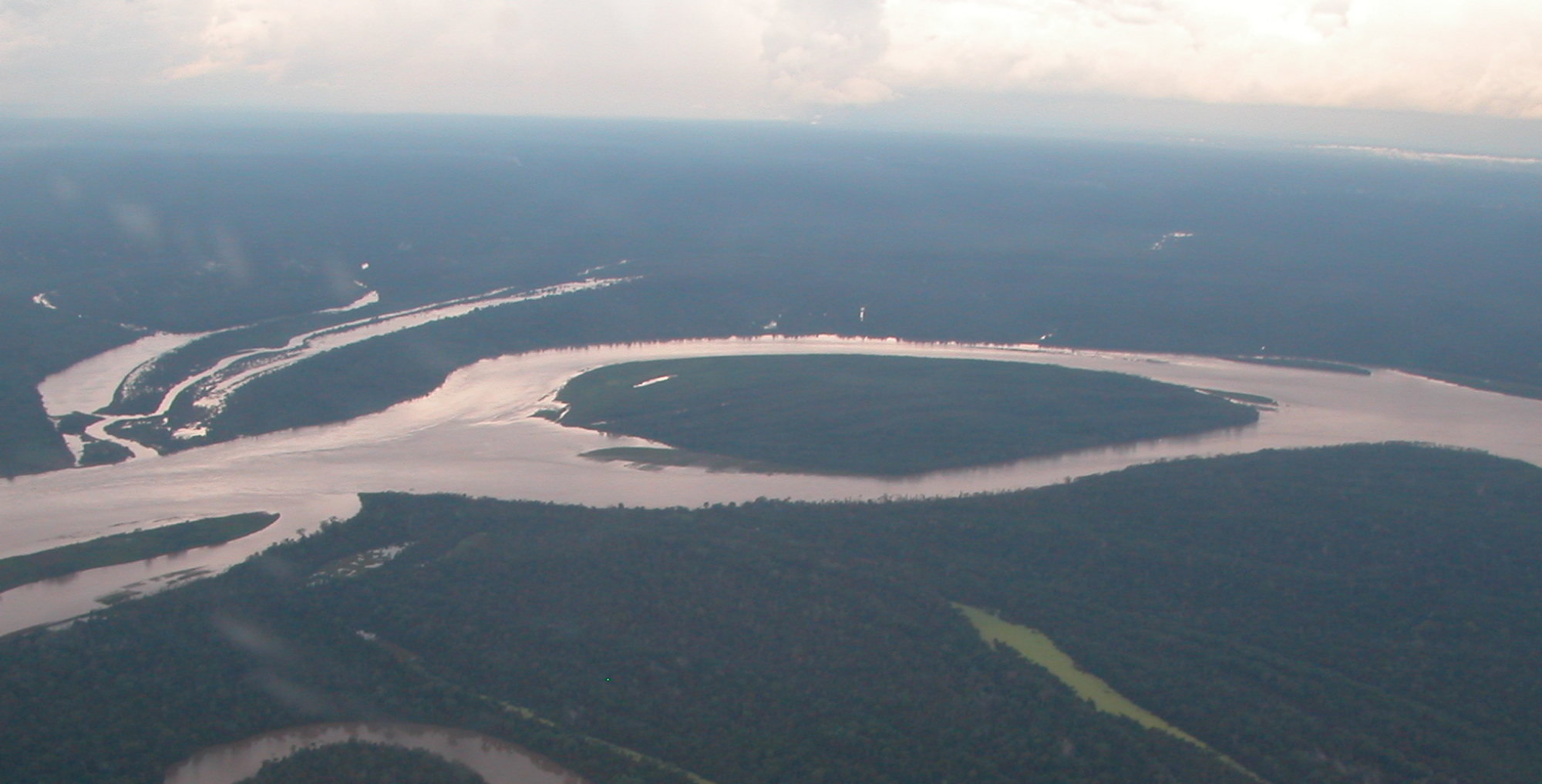
Thank you to Caudalie and Ekibio for their trust and their commitment to the Amazon rainforest! 🌳

Thanks to their support—provided through 1% for the Planet France—we have reached a significant milestone: transforming iconic Amazonian fruits into new, sustainable economic opportunities for local communities.
In 2025, their funding enabled us to begin construction on a pilot facility dedicated to processing aguaje, a fruit emblematic of our region.
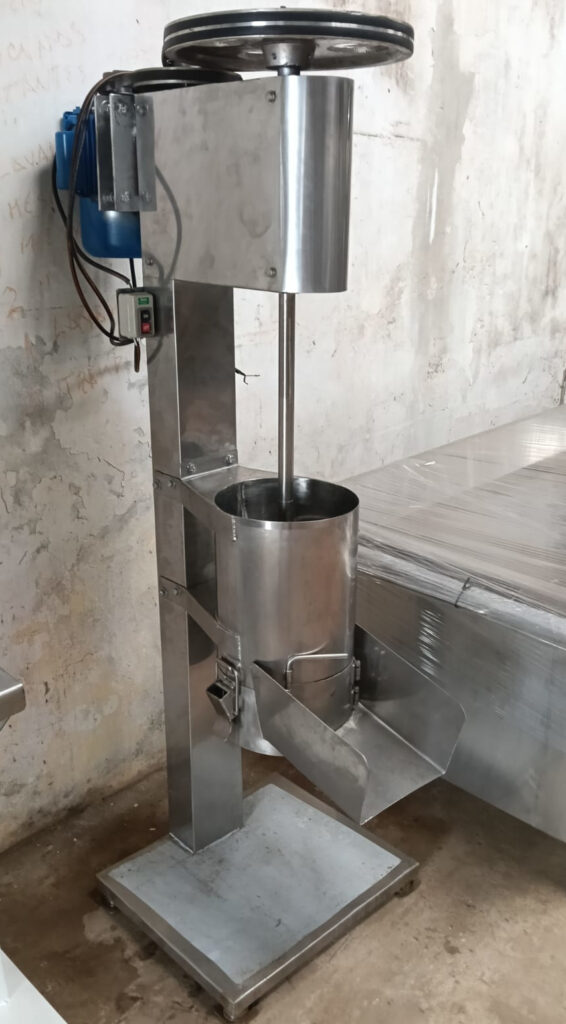
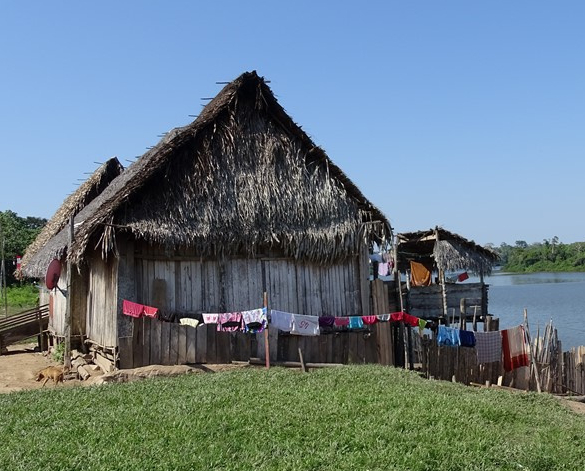
Today, the project is taking shape! Construction of the facility is nearing completion, and the equipment required for fruit processing—including a pulping machine, a dryer, and an oil-extraction press, all shipped by boat from the city of Iquitos—has finally arrived at the port of Mahuizo, on the Ucayali River.
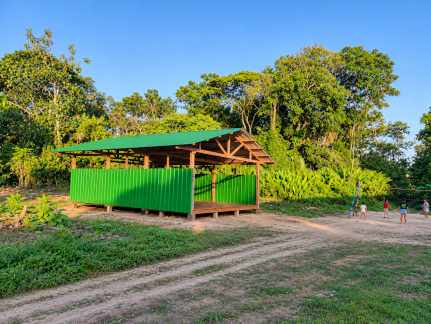
This unit will also make it possible to process other Amazonian fruits, such as açaí and camu-camu, thereby contributing to the sustainable valorization of local biodiversity.
A few steps remain—notably ensuring the module’s energy autonomy and completing the installation of certain equipment—but the local residents are already showing great enthusiasm, especially within the community of Mahuizo, where the center is nearing completion.
We have also installed a biodigester there—a first for this part of the Amazon.
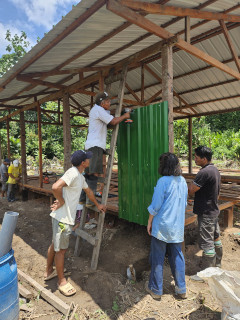
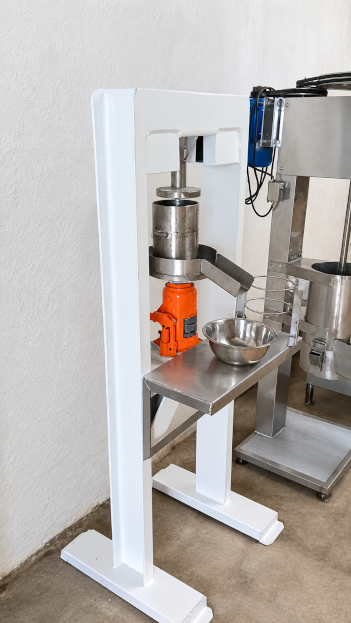
For the local inhabitants, this is a new opportunity to leverage the resources of their region, develop local economic activities, and strengthen their commitment to forest conservation.
Thank you to Caudalie and Ekibio for helping to make this initiative a reality!
When the Forest Sets the Pace : A Primatologists’ Expedition in the Amazon

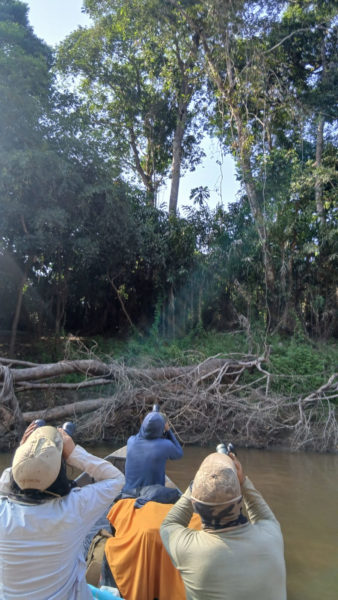
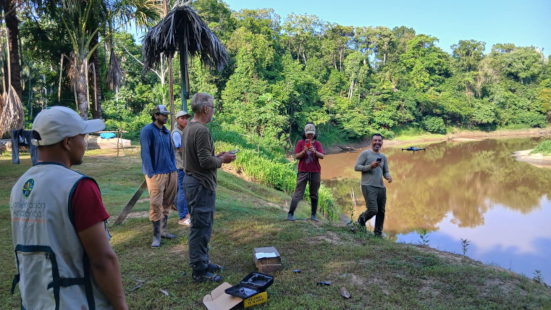
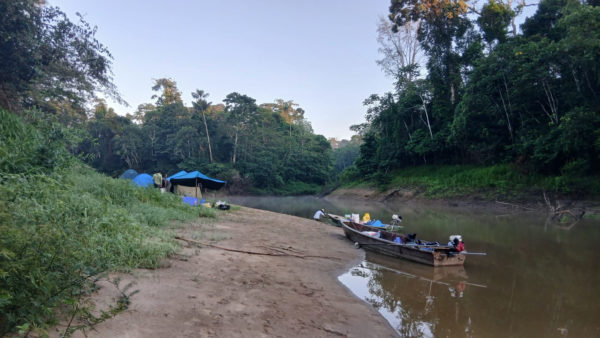
From August 26 to September 6, a team of primatologists from Proyecto Mono Tocón (PMT) carried out an expedition in the heart of the reserve, despite the difficulties caused by strikes in the Amazon, fuel shortages, and rapidly changing weather conditions.

One of the expedition’s objectives was to reach the source of the Romayne River, in the center of the reserve, an area of exceptional biodiversity. However, after two days of navigation, the team had to turn back: a severe drought had drastically reduced the river’s water level, making further progress almost impossible. Although the river channel had been cleared a few days earlier, the boats could barely move forward through the logs and branches, requiring considerable effort from the entire team.


The expedition then continued in the Yanayacu sector, in search of the leoncito (Cebuella niveiventris), one of the smallest primates in the Amazon and classified as Vulnerable (VU) by the IUCN. Thanks to the excellent knowledge of the area gained by the forest rangers, who had been monitoring this species for several months, the primatologists were able to observe three leoncitos in a single tree.

In Maquia, the team continued its search for the black uakari (Pithecia sp.), also classified as Vulnerable (VU). Other primates were observed as well, including the white monkey and the musmuqui, along with other wildlife species.

We now look forward to receiving the scientific report from the expedition and the remarkable images captured by the Proyecto Mono Tocón team.

Once again, this expedition demonstrates the importance of local knowledge and the daily work of forest rangers for scientific research and the conservation of Amazonian biodiversity.

Aucun bloc sélectionné.

First mapping of natives sting less bees species in Yanayacu-Maquia

Bees are true guardians of biodiversity. Their role as pollinators is fundamental to the maintenance of ecosystems and is a key element for human food security.

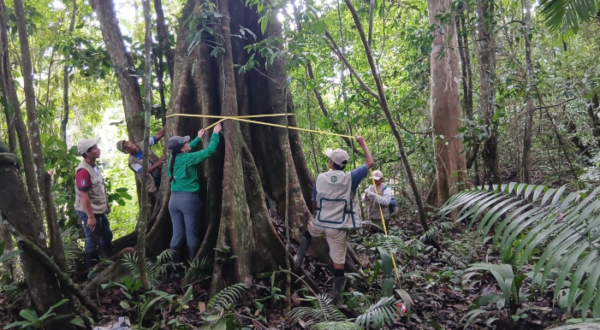
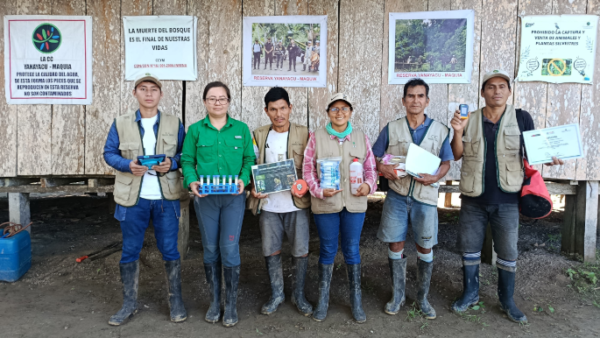
Aware of their importance, a team made up of researchers from Amazon Research International and forest custodians from the Yanayacu-Maquía Conservation Concession (CCYM) entered the area to carry out a first baseline study on native stingless bees.

This initiative represents a first step towards understanding, valuing and disseminating the extraordinary richness of this group of animals and comprehending the important ecosystem benefits they provide to the maintenance of the forests that extend along the Yanayacu River.

Initial results confirm the high biodiversity present in the CCYM. A total of 27 nests were georeferenced, of which 73% have not yet been specifically identified. These nests were found in 19 different species of trees and palms, some of which are under intense pressure due to illegal logging.

Over the years, the CCYM has attracted the interest of various organizations and researchers whose goal is to explore, understand, and contribute to the conservation of its extraordinary biodiversity. This time, the focus was on native stingless bees: a group of animals to which we owe far more than we imagine, and whose importance remains largely unknown to the general public. Protecting bees is protecting forests, biodiversity, and ultimately, our own existence. Because we often forget that our lives also depend on them.

Full screen

🌿 A privilege that very few people will ever witness. 🐒

A troop of red uakaris (Cacajao calvus), an endangered species, moving freely from branch to branch through the forests of the Yanayacu-Maquía Conservation Concession.

Their presence is proof that when a forest is truly protected, life thrives.

Protecting this biodiversity requires constant vigilance, unwavering commitment, and tremendous human and financial efforts. But moments like this remind us that every effort is worthwhile.

Native bees: invisibles guardians of the Amazon

The native birds are the essential pollinisatrices of the Amazonian forest and local cultures, but the diversity and distribution are not fully understood.

As part of a collaboration with Amazon Research International (ARI), the Yanayacu-Maquía Conservation Concession (CCYM) will participate in the first native bee mapping program in Peru, which combines indigenous knowledge with scientific research.

In July, an ARI team will study 40 stingless bee nests already located by CCYM forest rangers, who will also receive training in scientific monitoring protocols.

The data collected will contribute to research on the effects of climate change, the relationships between bees and the trees they inhabit, and to the creation of a research corridor dedicated to native bees.

According to Rosa Vásquez Espinoza, biologist, chemist and director of ARI, the high concentration of nests observed in a restricted area of ​​Yanayacu-Maquía confirms the exceptional importance of this concession for the conservation and study of native Amazonian bees.

Two lives saved thanks to antivenoms from the Yanayacu-Maquía Reserve

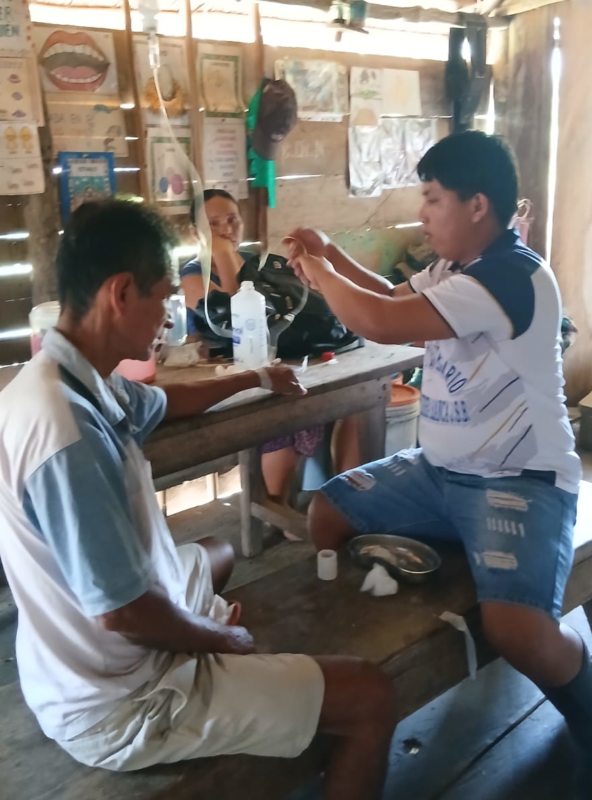
Conservation work entails significant challenges, one of which is the risk of bites from venomous snakes inhabiting the forest. This reality compels organizations to seek out preventive measures and ensure safety by providing medical supplies, thereby preventing bite cases from escalating into more serious situations. Fortunately, for years, forest rangers have not had to make use of antivenom.

In 2023, a resident of the Santa Lucía community reached out to us for antivenom after being bitten by a shushupe (Lachesis muta). The community immediately turned to the reserve’s park ranger, who always keeps a dose of antivenom on hand. The communities of Mahuizo, Santa Lucía, Selva, and Florida know they can rely on us for this resource. They also understand that they are obligated to replace the antivenom—ensuring it remains available to save other lives when needed—either by providing a replacement dose or by assisting the park rangers with various tasks related to the conservation of the protected area.

Yanayacu-Maquia Conservation Concession recognized by UN as an 0ECM

On February 24, we celebrated a major milestone: the recognition of the Yanayacu-Maquía conservation concession as an OECM (Other Effective area-based Conservation Measure) by Peru’s Ministry of the Environment. An OECM is an international designation defined by the UN Convention on Biological Diversity (CBD). 🌿 This recognition highlights the commitment of our team and our partners, who are working to protect this precious Amazonian territory and its incredible biodiversity.

🐾🌳 One more step toward conservation and the strengthening of initiatives that protect our forests and rivers.

💚 We continue our work for the Amazon!

We are out in the field, not at COP30!

Right after the forest ranger’s report, I received a call asking why I wasn’t at COP30! Just a few days earlier, someone had asked if I hadn’t been at the Convention on Biological Diversity in Panama the previous month.

To this, I replied that we are out in the field—not in conference halls—and that the meager resources we do have go toward paying the forest rangers’ salaries!Iván Isuiza, the reserve’s head ranger, reports that the floating barrier installed on the Romayna River just two months ago has been broken.
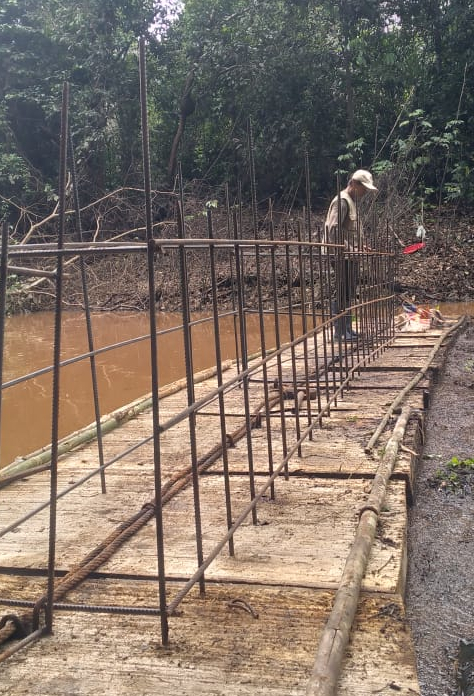
We had a 12-meter-wide barrier built using metal construction bars to prevent intruders from entering Lake Romayna—a true reservoir of wildlife.
Fishermen, hunters, and loggers are constantly attempting to gain access, but our team of rangers checks the floating barrier every day. This time, it was vandalized.

The ranger team immediately set off for the lake to remove the trespassers who had just set up camp along the water’s edge.After lengthy discussions, they were removed—though not without difficulty; they had just set up their fishing net. They claim it took them three hours, in the middle of the night, to get their canoe across the floating barrier, and that they had invested a significant amount of money to reach that point.
The problem is that these offenders often use chemical substances to speed up their work, thereby destroying the aquatic ecosystem that we strive so hard to protect.received a call asking why I wasn’t at COP30! Just a few days earlier, someone had asked if I hadn’t been at the Convention on Biological Diversity in Panama the previous month.Right after the forest ranger’s report I replied that we are out in the field—not in conference halls—and that the meager resources we do have go toward paying the forest rangers’ salaries!

International Award Winner – 1% for the Planet

💚 A huge THANK YOU to you all!
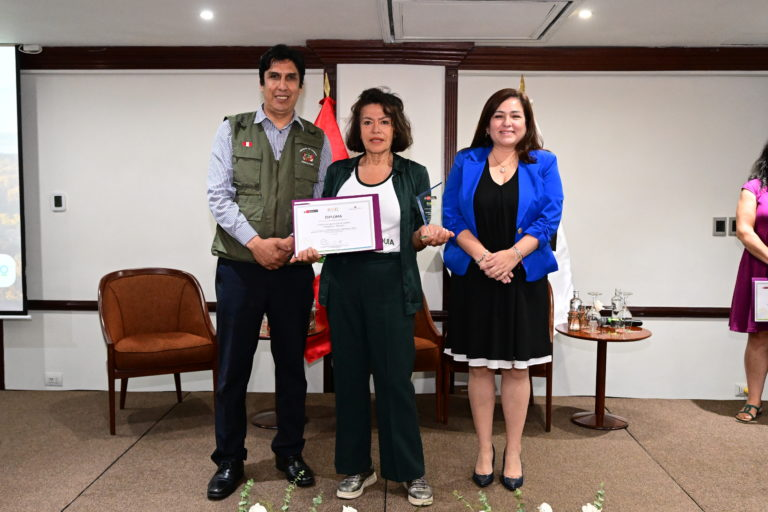
At the @1% for the Planet gathering, our organization, Biodiversité Amazonienne, had the great honor of being named a winner in the international category 🌍
✨ Thanks to your generosity—and with the support of @CaudalieFrance, @fondationekibio, those who contributed to our campaign, and the collective of @1% for the Planet sponsors—


we are now able to begin the first phase of the project 🌱
In a few months, we will share images showing what your donations have helped bring to life on the ground.

Gatherings for the Planet 2025

Our project has been selected as one of the 40 winners for the 2025 Rencontres pour la Planète (Gatherings for the Planet), organized by 1% for the Planet—chosen from over 180 applicants! 🥳
📍 On October 7th and 8th in Paris, we will have the honor of presenting the Aguaje—the “tree of life”—to a committed audience, including both 1% for the Planet member and non-member companies, foundations, and patrons.
This flagship event in environmental philanthropy offers two days to discover the most promising non-profit projects, engage directly with the people behind these initiatives, and meet other dedicated stakeholders.
Your presence would be invaluable to us. It would demonstrate that projects like ours can rely on a strong, committed network—such as yours. It will also be the perfect opportunity to connect with other philanthropists, exchange ideas, and share your own commitments.
Register now for this must-attend event: https://urlr.me/z3GAq9
We look forward to seeing you there,
The Biodiversité-Amazonienne team