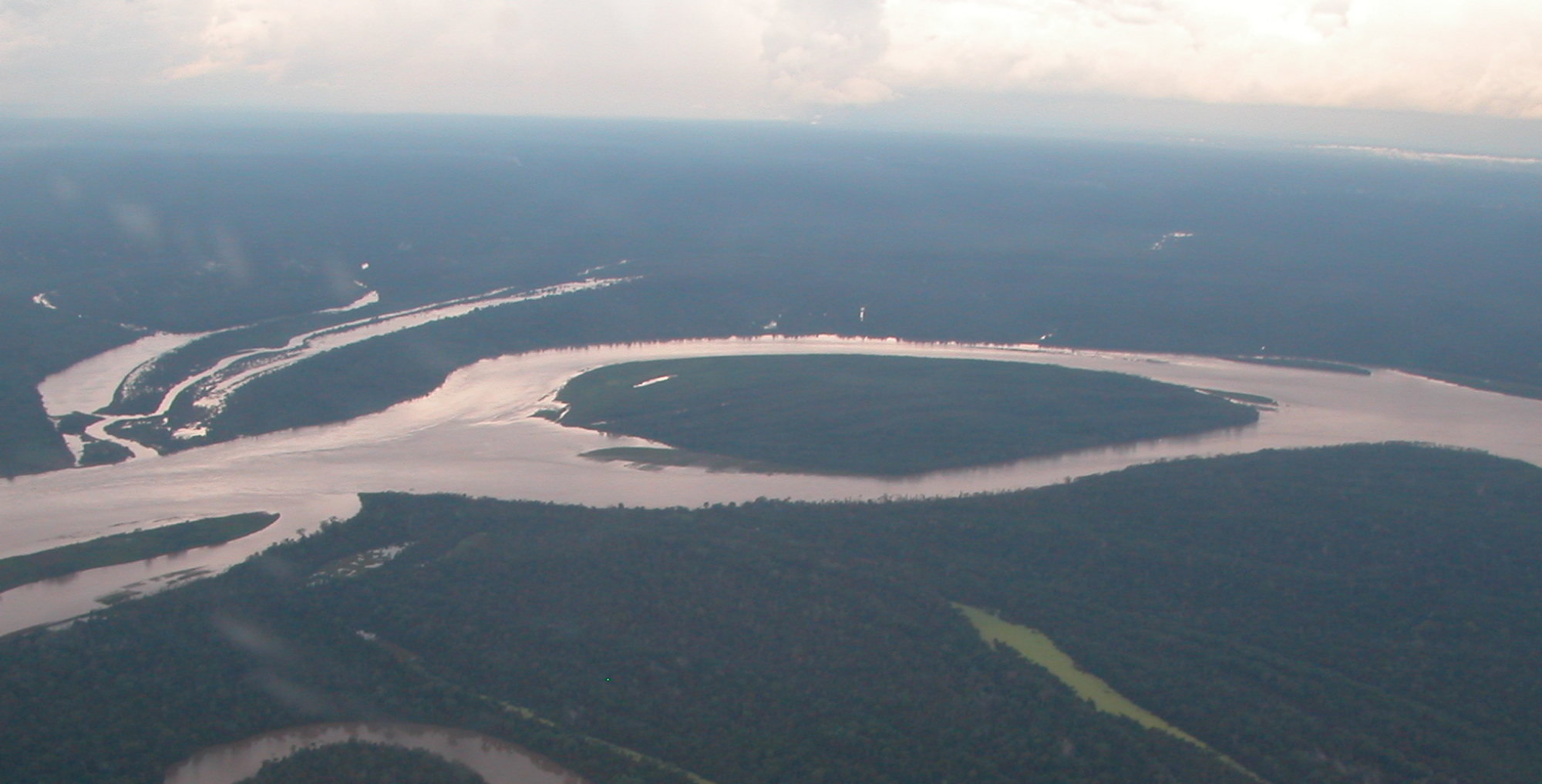
Learning in the Pacaya-Samiria Reserve

From May 10 to 14, a team—comprising residents from communities surrounding the Yanayacu Maquia conservation concession (Mahuizo, Santa Lucía, Selva Alegre, and Nueva Florida) in the Loreto region, park rangers from the concession, and representatives from the NGO Envol Vert—embarked on a learning trip to the indigenous communities of Veinte de Enero and Yarina, located within the Pacaya Samiria National Reserve (RNPS). The goal of this visit was to explore and learn about various sustainable activities carried out within the reserve, such as the management of the taricaya (yellow-spotted river turtle, Podocnemis unifilis), community-based monitoring, and the utilization of aguaje (Mauritia flexuosa)—an Amazonian “superfruit” of high nutritional, environmental, social, and economic value.

For over 20 years, the community of Veinte de Enero has recognized the importance and necessity of forest conservation; consequently, they have adopted specific techniques for harvesting aguaje that ensure their livelihoods are not compromised by destructive practices, such as the felling of the palm trees. We began the training with an icebreaker—a highly dynamic activity that helped our colleagues and the group of aguaje harvesters from Veinte de Enero feel at ease and build rapport—followed by a training session led by Mr. Modesto Zamora Nascimento, a representative of the Association for the Conservation of Natural Resources – Veinte de Enero (ACORENA).During the training, it was impressive to see a group of local residents of various ages—ranging from 16 to 86—climbing palm trees using different types of equipment, demonstrating their skills in approximately two minutes.

The workshop in Pacaya Samiria was an unforgettable experience; it offered a chance to step outside one’s usual routine and learn that it is possible to generate income from forest resources without destroying ecosystems, all while working together as a team with complete transparency. Now, all that remains is to express gratitude for the knowledge shared and to put what has been learned into practice—proving that, with determination, anything is possible.

Climbing for Conservation

From September 1st to 15th, in the community of Santa Lucía, a training program titled “Aguaje Climbing and Harvesting” (Escalado y Cosecha de Aguaje) was held as part of the Aguaje Sostenible (Sustainable Aguaje) project. The event included participants from the four communities surrounding the Yanayacu–Maquía conservation concession: Mahuizo, Santa Lucía, Selva Alegre, and Nueva Florida. The training was led by Wiler Tuesta Velasquez—the Apu (leader) of the Veinte de Enero indigenous community, located within the Pacaya Samiria National Reserve—who possesses over 20 years of experience working with this Amazonian palm. He was assisted by a second instructor, Alex Zamora, son of the president of ACORENA (Association for the Conservation of Natural Resources). Together, they shared their experiences, as well as their theoretical and practical knowledge, with the community members attending the workshop.

The training focused primarily on field preparation, covering climbing techniques, the manual fabrication of slings (subiders), and the use of the maquisapa (a type of climbing aid). Throughout the sessions, participants demonstrated a strong interest and made a concerted effort to learn climbing skills; many started with no prior experience, while others refined their existing techniques. During the training, participants emphasized the importance of this practice, noting that in previous years they had resorted to cutting down the palm trees—a practice that had left the remaining aguajales (palm groves) increasingly out of their reach.

Lotty Morey with the French Ambassador to Peru and the Peruvian Minister of the Environment

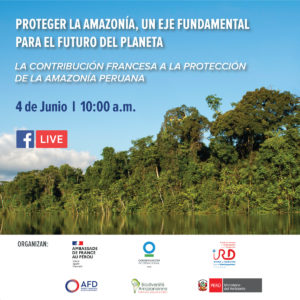
On 4 June, Lotty Morey, President of Amazon Biodiversity, spoke at a conference on France’s contribution to protecting the Amazon. Alongside the French Ambassador to Peru and the Peruvian Minister of the Environment, the President of the association recalled the association’s missions and their importance in protecting the Amazon and supporting local communities.

She was able to highlight the three main areas of work of Amazon Biodiversity: conservation, scientific research and development of economic alternatives. This intervention should allow the association to be identified by major actors in the environmental protection sector, and to develop new projects and partnerships!

Watch the conference again

Successful outreach to communities in the concesion!

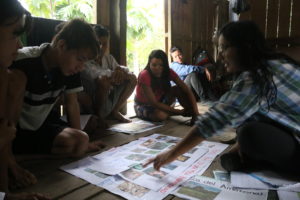
This month, Charlène, Lotty, and Steffanny (the forestry engineer from Envol Vert) visited the Conservation Concession to hold awareness-raising workshops within the various local communities. The workshops focused on the status and importance of the Yanayacu Maquia Conservation Concession, as well as the services it provides to the environment and biodiversity.

Despite varying levels of participation across different communities, the workshops were, on the whole, a success. The local population appeared interested and engaged in the project; women and children, in particular, made themselves available for these group sessions.

Furthermore, we were able to present upcoming agroforestry and crop diversification projects that Biodiversité Amazonienne and Envol Vert intend to implement. These initiatives were well received, and the local residents showed enthusiasm for participating in training and awareness-raising activities.

While Lotty and Charlène had to leave the concession after a few days, Steffanny will remain on-site to continue the socio-economic and agricultural assessment of the area, while also conducting awareness-raising activities.

A new checkpoint and an effective barrier to combat poachers

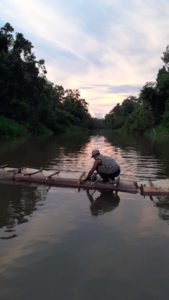
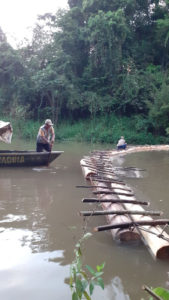
A few months ago, we initiated the construction of a fourth control post within the concession. This structure was strategically positioned along the Tanayacu River, at the entrance to the Camungo stream. Downstream from the checkpoint, we also installed a floating barrier to prevent poachers from entering the concession.
This month, we returned to the site to assess the area. The results show that both the control post and the floating barrier have been highly effective; no poachers have managed to pass through, and the wildlife, fish, and timber in this part of the concession have remained protected.

Lotty Morey, President of the association, winner of the Terre de Femmes award for her commitment to the Amazon

We are very proud to announce that Lotty Morey, President of the Amazon Biodiversity Association, has been awarded the Terres de Femmes prize for her work to preserve the Amazon rainforest. The winners of this award, presented by the Yves Rocher Foundation, are women who “work for biodiversity and to change the world.”

A beautiful video is worth a thousand words, so let’s (re)discover the work of our association, set against some magnificent landscapes.

Accident in the Ampicocha lagoon

This is my publication of an anecdotal story from the story of Lotty Morey, president of the Amazon Biodiversity Association. Although all of them are pink in color, you may also want to present some of the difficulties that may affect the members of the camp team. We tell you the story of Iván, the principal guard of the concession, who violated his complicaciones by the evil time.

Iván, accompanied by 2 tenants, headed to Romayna Creek to desalojar the cazadores and woodworkers who buscaban árboles commerciales that ya no existen fuera de la concesión. In a great storm, the lake water stirred and the boat flew with the engine and all the equipment inside. They were rescued by 3 people from the community of Florida located in the Lake Orilla. After a few decades of time, please turn the boat to the correct direction. Recover the engine without water.

I will travel at various speeds to try to recover my bag, which contains my mobile phone, bills, maps and other important objects. When caught in a space on the boat, it was safe to stay safe.

Sin embargo, we cannot recover the bag that contains important material: alicates, llaves, bujías and other equipment that must be transported on all long routes. The personal escaped with some bruises, unfortunately not serious. Sin embargo, the motor is unused. Se reparó a few days later, which allowed Iván to dissuade the cazadores from stealing into the concession.

Installation of floating barriers at the entrance to the CCY

At the start of this year, park ranger teams are strengthening surveillance measures and installing floating barriers at the entrances to the reserve; the most sought-after area is undoubtedly the Romayna sector.

Romayna serves as a breeding ground for the paiche (arapaima)—an endemic fish whose size and market value attract many fishermen to this remote, exceptionally well-preserved area. The fish thrive here, with paiche sometimes reaching lengths of over 1.5 meters. The area is also home to trees—many centuries old—belonging to species that, unfortunately, no longer exist outside the reserve. Shihuahuaco and mahogany trees are the primary victims of this intensive, unregulated logging.

At the start of this year, park ranger teams are strengthening surveillance measures and installing floating barriers at the entrances to the reserve; the most sought-after area is undoubtedly the Romayna sector.

The future of the forest also rests with the younger generations.

More than 65 people took part in the discovery and relaxation afternoons organized by Steffanny, which focused on the theme of conservation. Through collective, outdoor awareness-raising activities, children from Mahuizo and Santa Lucia were able to share their feelings and perspectives regarding the environments they encounter in their daily lives.The future of the forest lies (also) with the younger generation

From an early age they are aware of the world around them and their interdependence with the biodiversity present. The parents, often hunters, fishermen, farmers or foresters, all live off what the forest offers them. A relationship that sometimes tends to diminish the present resources that are essential for the survival of local communities.

Over the course of several afternoons we were able to laugh and exchange life stories with them, highlighting their relationship with nature. A moment of playful reflection to highlight the richness of the exceptional environment of the reserve and the economic and social interest that its conservation represents for these villages.

Even at a very young age, they are aware of the world around them and their interdependence with the local biodiversity. Their parents—often hunters, fishers, farmers, or forest workers—all rely on what the forest provides. This relationship, however, can sometimes lead to the depletion of resources that are essential for the survival of these local communities.

Raising Awareness for Conservation

The end of the year is approaching, and rain is on the way; an ideal time to raise awareness among users of the reserve about its conservation and its importance in providing resources essential to their well-being.Raising awareness of conservation

The end of the year is approaching and the rain is coming; an ideal time to raise awareness of the reserve’s conservation and its usefulness in providing resources essential to their well-being.

This month, several activities were proposed to the 4 communities bordering the Concession: discovery of economic alternatives to conservation, debate on the preservation of forest resources, environmental animation for children and visits to plots for farmers aiming to valorise the available resources. A varied programme which reached around 70 adults and 50 children and which notably allowed the planting of 430 endangered trees in schools or on the plots of interested producers: quinilla colorada (Manilkara bidentata) cedro (Cedrela odorata) cumala colorada (Virola sebifera).

Steffanny (forestry engineer) spent a month with them and will return next year to continue the work in a sustainable way.

This month, several activities were offered to the four communities bordering the Concession: exploring economic alternatives to conservation, discussions on preserving forest resources, environmental activities for children, and field trips for farmers to help them make the most of available resources. A diverse program reached approximately 70 adults and 50 children, notably resulting in the planting of 430 endangered trees in schools or on the plots of interested farmers: quinilla colorada (Manilkara bidentata), cedro (Cedrela odorata), and cumala colorada (Virola sebifera).

Steffanny (a forestry engineer) spent a month with them and will return next year to continue the work with a focus on sustainability.

This month, several activities were offered to the four communities bordering the Concession: exploring economic alternatives to conservation, discussions on preserving forest resources, environmental education for children, and field visits for farmers to help them make the most of available resources. A diverse program that reached approximately 70 adults and 50 children, which notably included the planting of 430 trees—all of which are currently endangered—at schools and on the plots of interested local producers. These species include quinilla colorada (Manilkara bidentata), cedro (Cedrela odorata), and cumala colorada (Virola sebifera).
Steffanny, a forestry engineer, spent a month working with the community and will return next year to continue the project with a focus on long-term sustainability.